Research note / 01
The Record Calibre 022-18
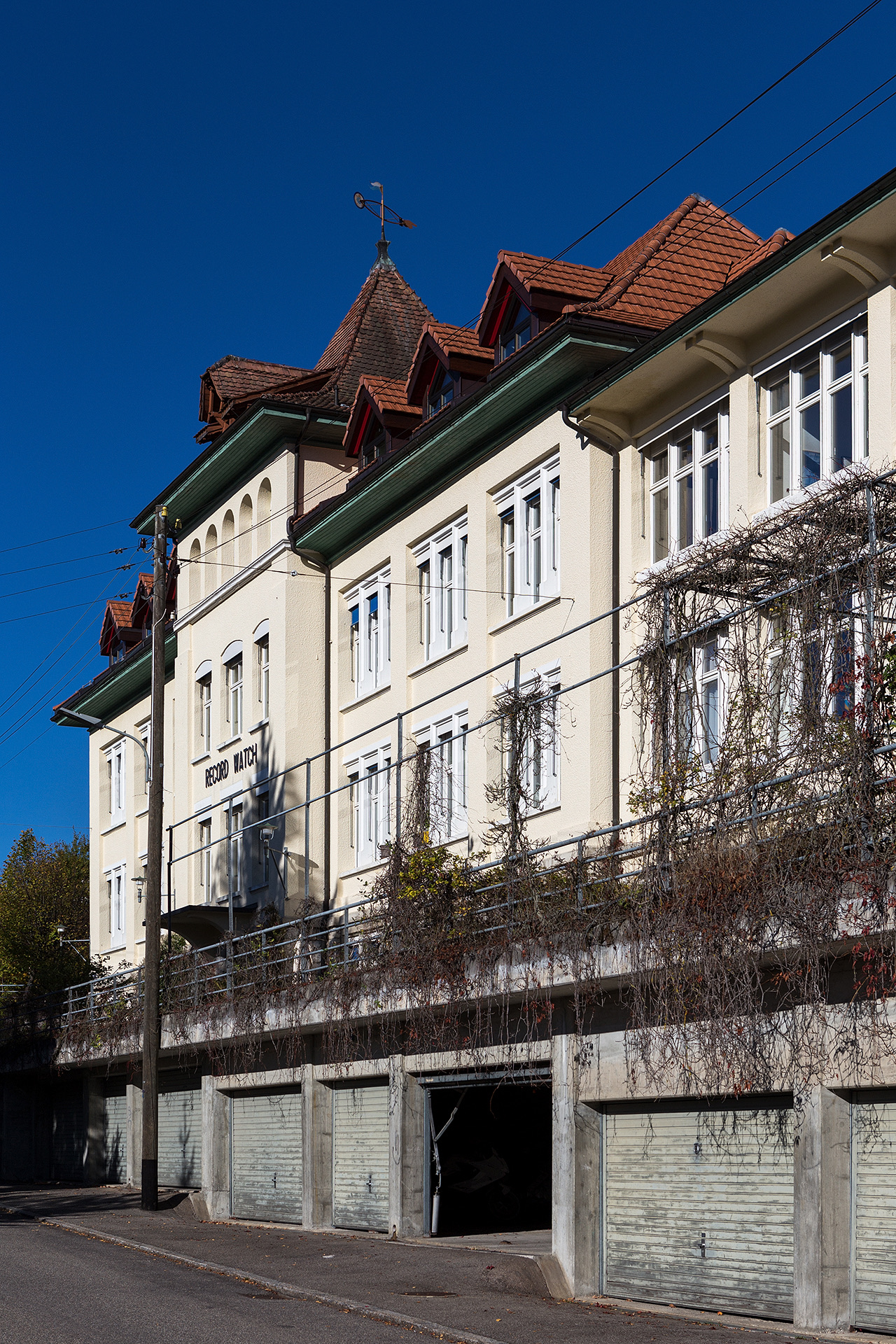
This unusually broad Record Genève brings together a large, flat 1950s case, a pressed two-tone dial and the manufacture’s 12½-ligne calibre 022-18.
At first glance, it appears to be a relatively conventional mid-century Record Genève: hand-wound movement, subsidiary seconds, silvered two-tone dial and no complication beyond telling the time. Look at it for another few seconds, however, and almost everything begins to feel exaggerated.
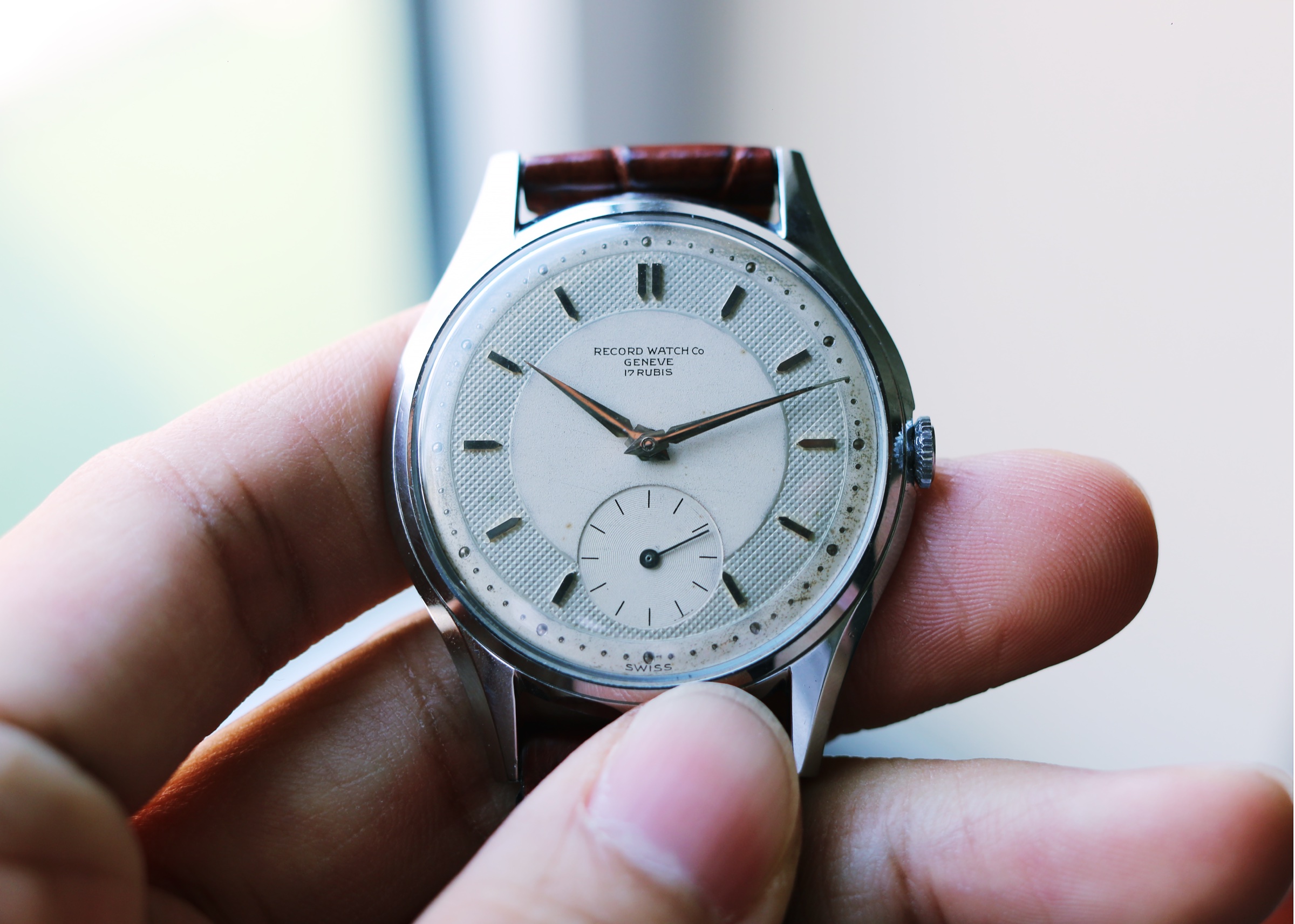
The case is approximately 37mm across—positively jumbo for an ordinary dress watch of the early-to-mid-1950s. Its lugs stretch the watch to roughly 44mm end to end, while the body itself is extraordinarily flat and broad. Seen from the side, the case resembles a polished metal disc suspended between four sharply cut supports: a miniature UFO with lugs.
Then there is the dial.
Chapter
The Dial Is Where It Starts
The most compelling part of this watch is the dial’s construction.
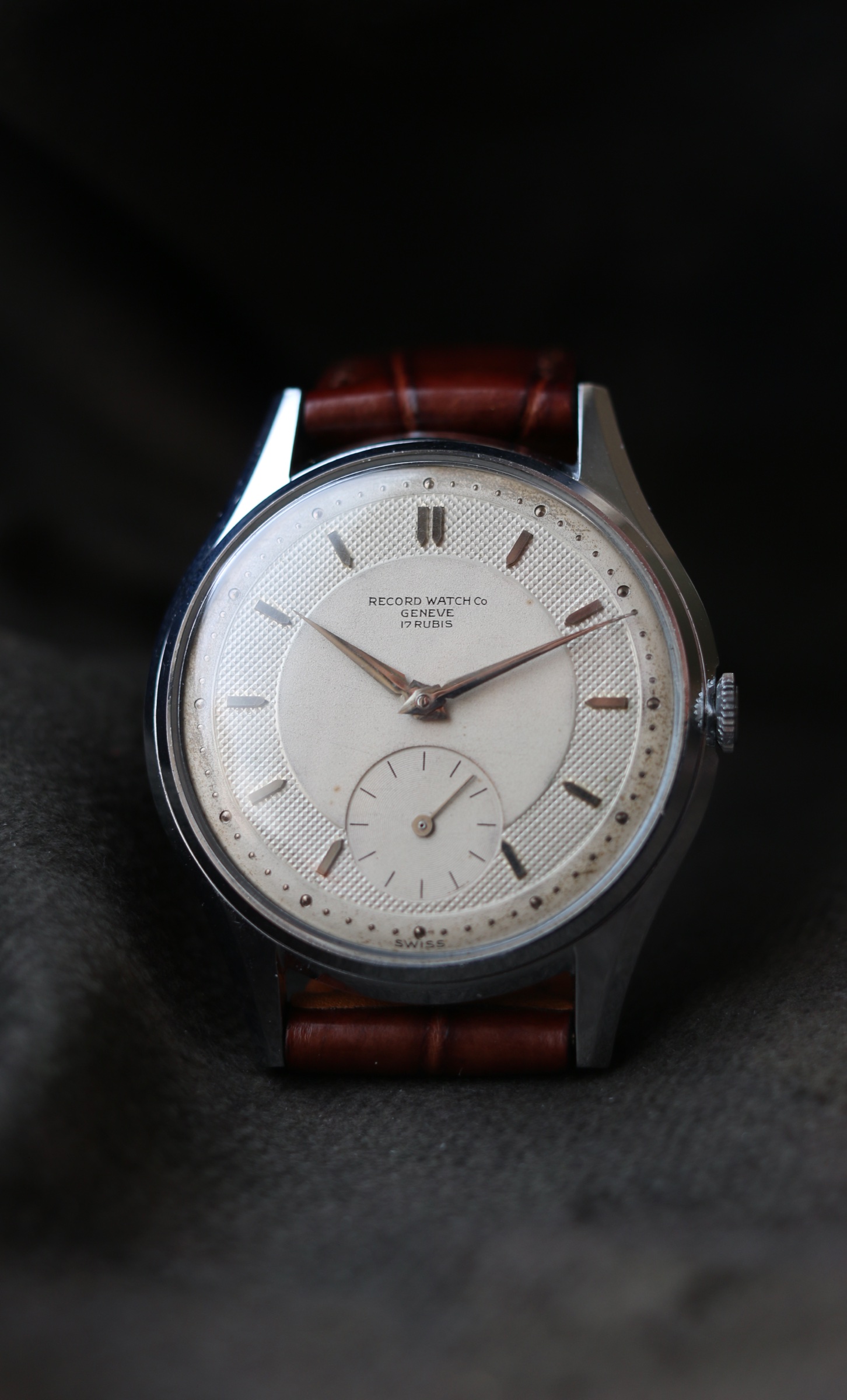
A finely pressed waffle pattern forms a broad ring around the smooth central field. This is not the deeply engraved guilloché one would expect from a costly hand-finished watch. It is an industrially pressed texture—but executed with enough precision that it comes alive as the light moves across it. From one angle the pattern is quiet and almost silver-white; from another, the tiny pyramidal cells darken and the entire outer dial takes on a woven, metallic depth.
Applied over that texture are twelve sharply faceted, bullet-like hour indices. They are thicker toward the dial and taper toward their outer points, giving each marker the appearance of a small polished projectile embedded into the waffle surface. The double marker at twelve supplies just enough visual ceremony, while the remaining indices keep the dial disciplined and symmetrical.
The subsidiary-seconds register cuts into the textured ring at six. Its much finer circular finish produces a third surface alongside the smooth centre and pressed outer track. Add the small polished minute pearls around the dial’s perimeter and the result is surprisingly architectural: concentric zones of changing texture, interrupted by applied metal objects and a perfectly placed small-seconds circle.
The dial does not shout. It flickers.
That distinction matters. The beauty here comes from the interaction between modest materials and ambitious surface design—not precious metal, enamel or hand engraving. It is a very mid-century kind of luxury: visual sophistication produced by clever industrial technique.
Chapter
A Flying Saucer With Knife-Edge Lugs
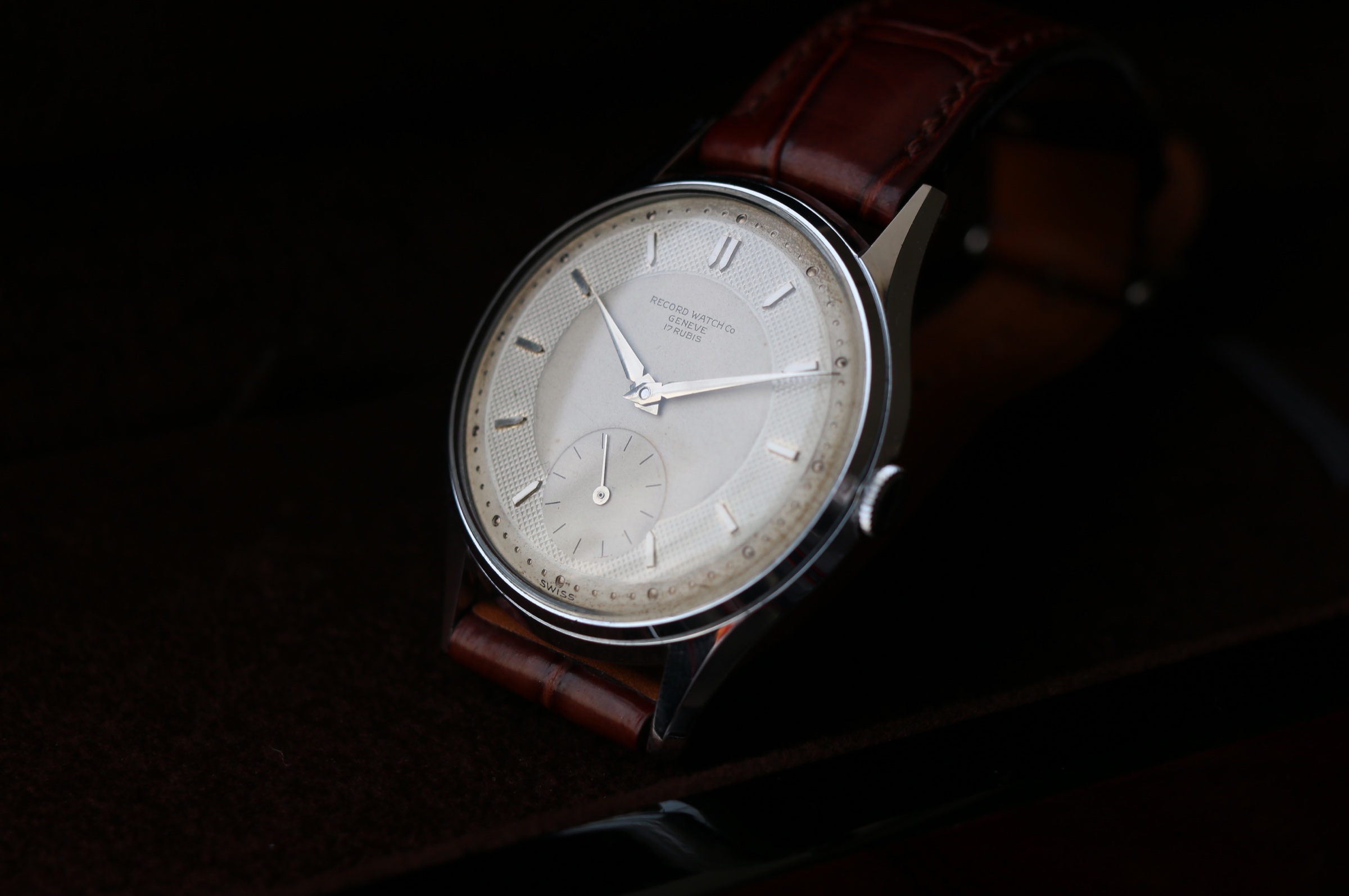
The case is equally unconventional.
Its upper surface is dominated by a wide, polished, stepped bezel that makes the watch appear broader and flatter than it actually is. The narrow mid-case almost disappears beneath it. Combined with the acrylic crystal, the construction gives the impression of a clear bubble sitting over a thin metal saucer.
The lugs could hardly be more different from the soft body. They emerge as long triangular wedges, broad at the case and narrowing toward the strap. Their upper surfaces are divided into distinct planes with surprisingly crisp edges. From above they appear almost spear-shaped; in profile, they turn decisively downward.
That downward bend is the secret to the watch’s wearability. A 37mm case with a 44mm overall length might sound substantial on a 15cm wrist, but the lugs do not continue horizontally into empty space. They fold around the wrist, bringing the strap down almost immediately. The watch therefore has the presence of a jumbo vintage piece without behaving like a modern oversized dress watch.
The transitions between the lug planes remain crisp enough for the original geometry to read clearly, especially where the upper facets break toward the case body.
The pale polished finish keeps attention on the case geometry rather than ornament. This is a watch using shape to create presence: a stepped circular body held between four sharply modelled planes.
Chapter
The Calibre 022-18
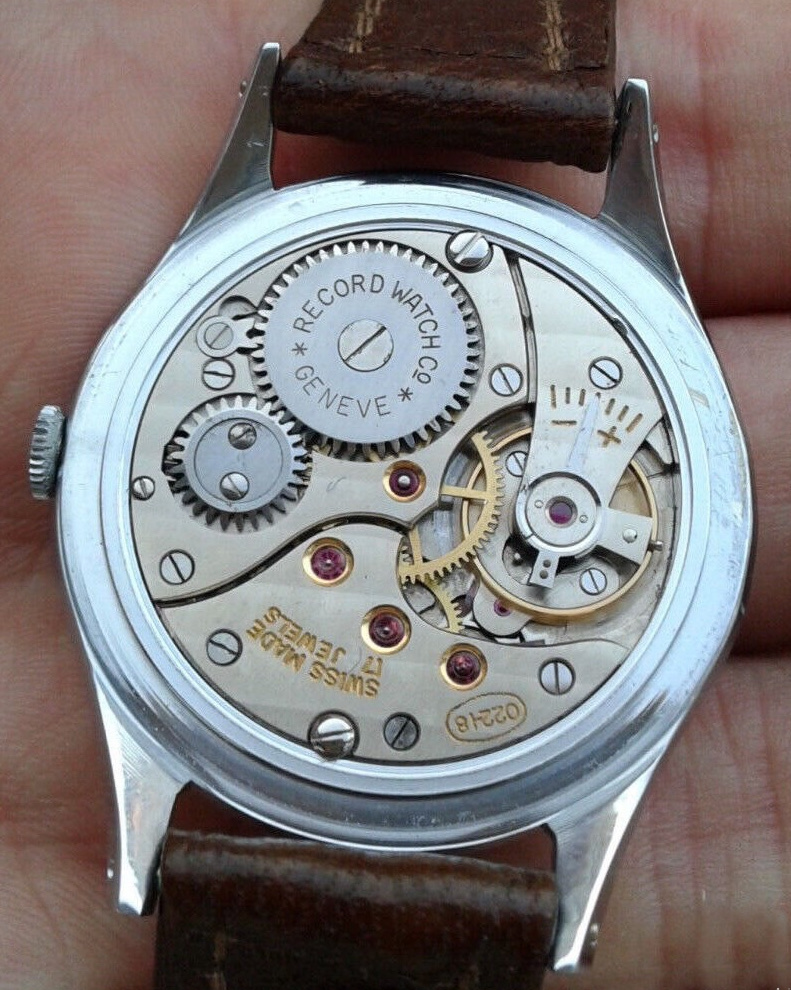
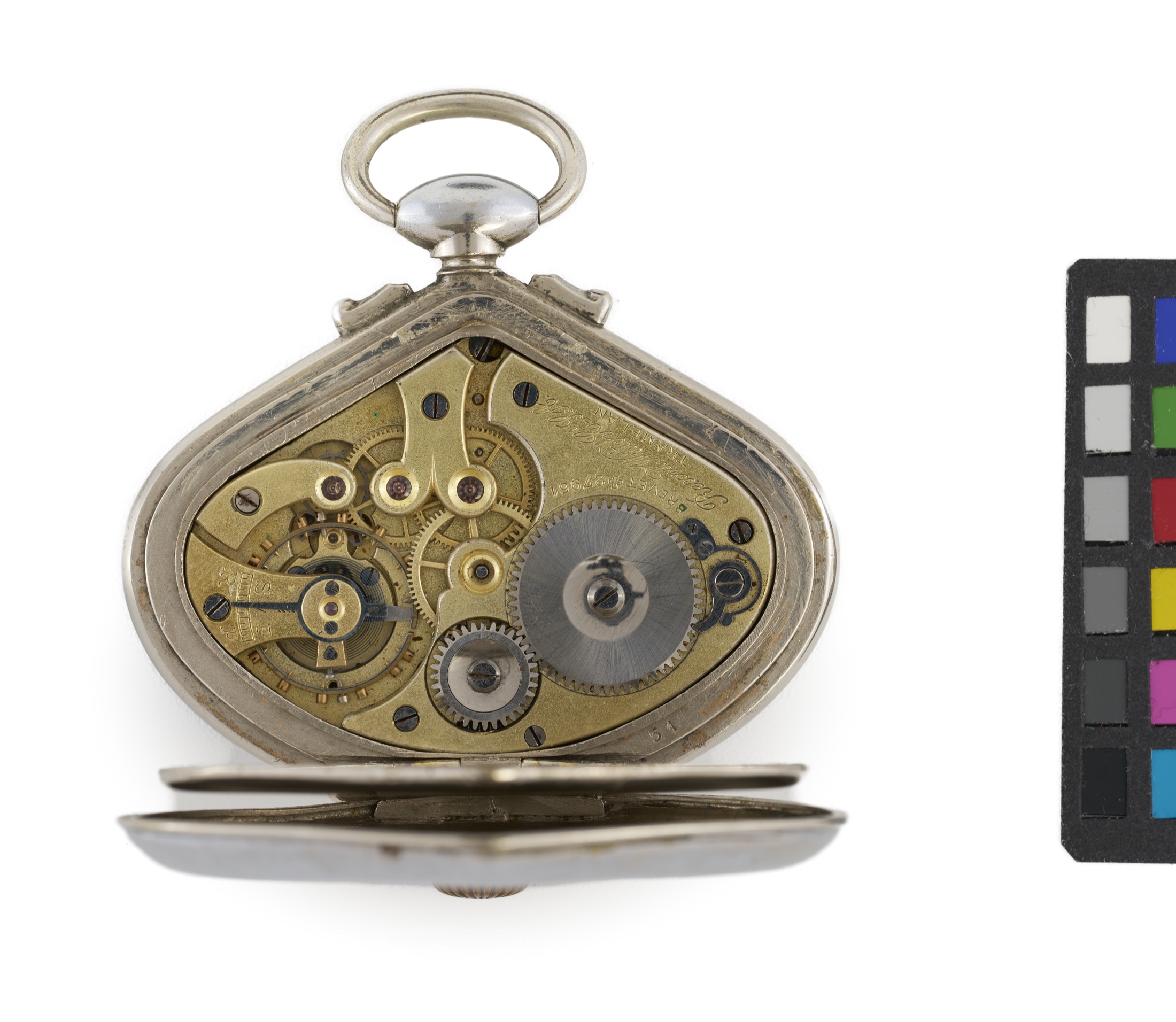
Beneath the dial is Record’s calibre 022-18, a hand-wound movement introduced around the mid-1940s and used extensively through the following decade.
It measures approximately 28.85mm across but only 3.40mm thick. That combination—a broad movement with very little height—is ideally suited to the watch’s flat, disc-like architecture. Rather than placing a small movement inside an oversized spacer, Record could build a broad, visually thin watch around a movement that already occupied much of the case.
The 022-18 runs at 18,000 vibrations per hour and provides approximately 41 hours of power reserve. It uses a conventional Swiss lever escapement, subsidiary seconds and, in later versions, Incabloc shock protection. Both 15- and 17-jewel executions existed; the “17 RUBIS” inscription on this watch fits particularly well with examples associated with the mid-1950s. Record 022-18 specifications and photographs .
It is not an exotic movement in the usual sense. There is no automatic winding, chronograph or calendar. Its appeal lies in proportion and construction: an unusually thin, full-sized manufacture calibre designed to perform an ordinary task reliably.
That is also what makes it appropriate for this watch. The movement does not compete with the dial or case. It quietly makes their unusual proportions possible.
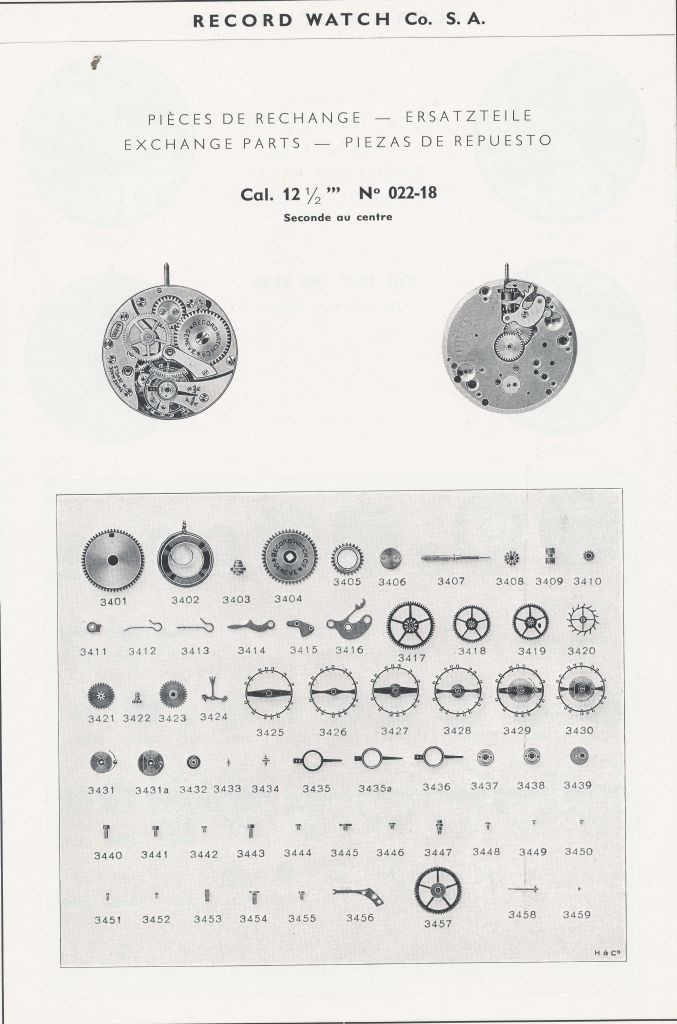
The exchange-parts sheet is explicitly labelled “Seconde au centre,” so it documents the central-seconds execution while retaining the simple calibre line “N° 022-18.” Read beside the surviving calibre records, it places this watch within a three-part series: the 3.40mm subsidiary-seconds base calibre, a 3.95mm SC version with central seconds, and a 4.50mm SC-CLD version with central seconds and date. All share a 28.85mm diameter and an 18,000-vph beat rate. Record 022-18 family .
The naming is less obvious than the mechanics. Documented examples indicate that each execution could still be signed simply “022-18”; SC and SC-CLD are useful functional distinctions rather than inscriptions a collector can expect to see on every movement. The dial therefore supplies essential evidence: subsidiary seconds at six identifies the base layout used here.
The similarly sized 022K belongs beside this story, but not inside the three-variant suffix sequence. It is also a 12½-ligne, 28.85mm manual calibre, yet its bridge architecture and parts references differ. Its best-known application is Record’s 15-jewel W.W.W. military watch. Record 022K specifications and 022K factory parts sheet .
The strongest evidence for this watch’s identity is a documented 1955 Record Watch Co. Genève with the same calibre 022-18.
Despite the misleading old Wittnauer wording preserved in its URL, the actual watch shown is a Record. It has a closely related stepped case, long downturned lugs, subsidiary seconds and a two-tone dial. Its dimensions, however, are only 33.8mm across and 42mm lug to lug.
The relationship is difficult to ignore. The smaller watch looks like the restrained production version; the present example looks as though the same design vocabulary was stretched outward, flattened and sharpened. The movement, dial signature, case shape and period all sit within the same recognisable Record vocabulary.
Chapter
The 022-18 Wore Many Faces
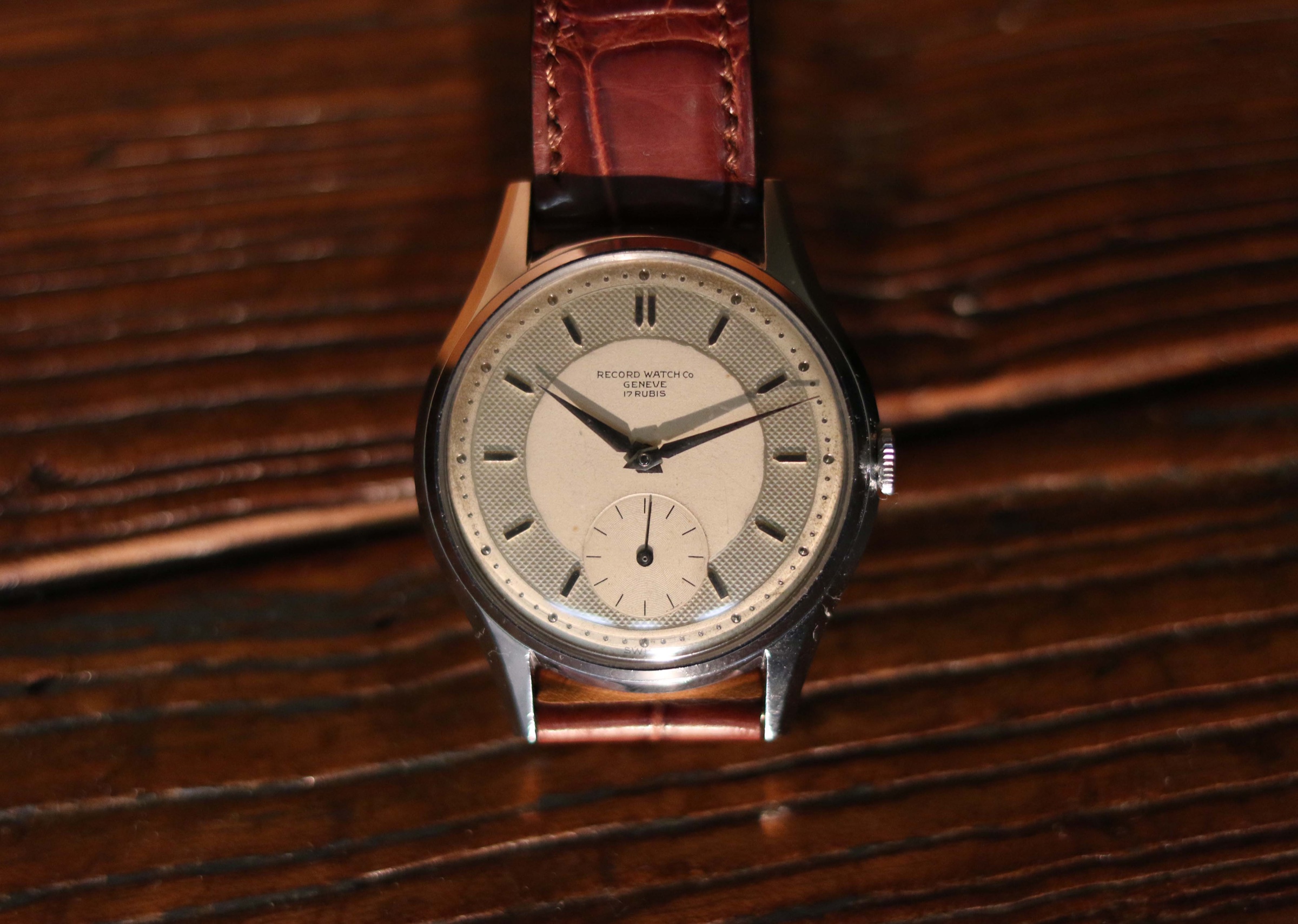
Surviving watches show how widely Record used this calibre. A hallmarked 1954 gold watch pairs the SC central-seconds execution with a 31.5mm case. A steel subsidiary-seconds example measures 33.5mm. A two-tone waterproof model in a sculptural case reaches about 36mm, while another chrome-plated subsidiary-seconds watch reaches 37mm. 1954 central-seconds example , 33.5mm subsidiary-seconds example , 36mm two-tone example , and 37mm dress example .
That range is the useful context for the present watch. Its 37mm diameter sits at the bold end of known 022-18 proportions, while its pressed waffle ring, bullet markers and sharply faceted lugs give the large format a distinctly architectural character. The interest lies not in a claim of uniqueness, but in how confidently Record dressed the same broad, thin movement in very different forms.
And yet this one remains—waffle dial intact, bullet markers still catching the light, knife-edge lugs still sharp and that improbable flying-saucer case still sitting comfortably on a 15cm wrist.
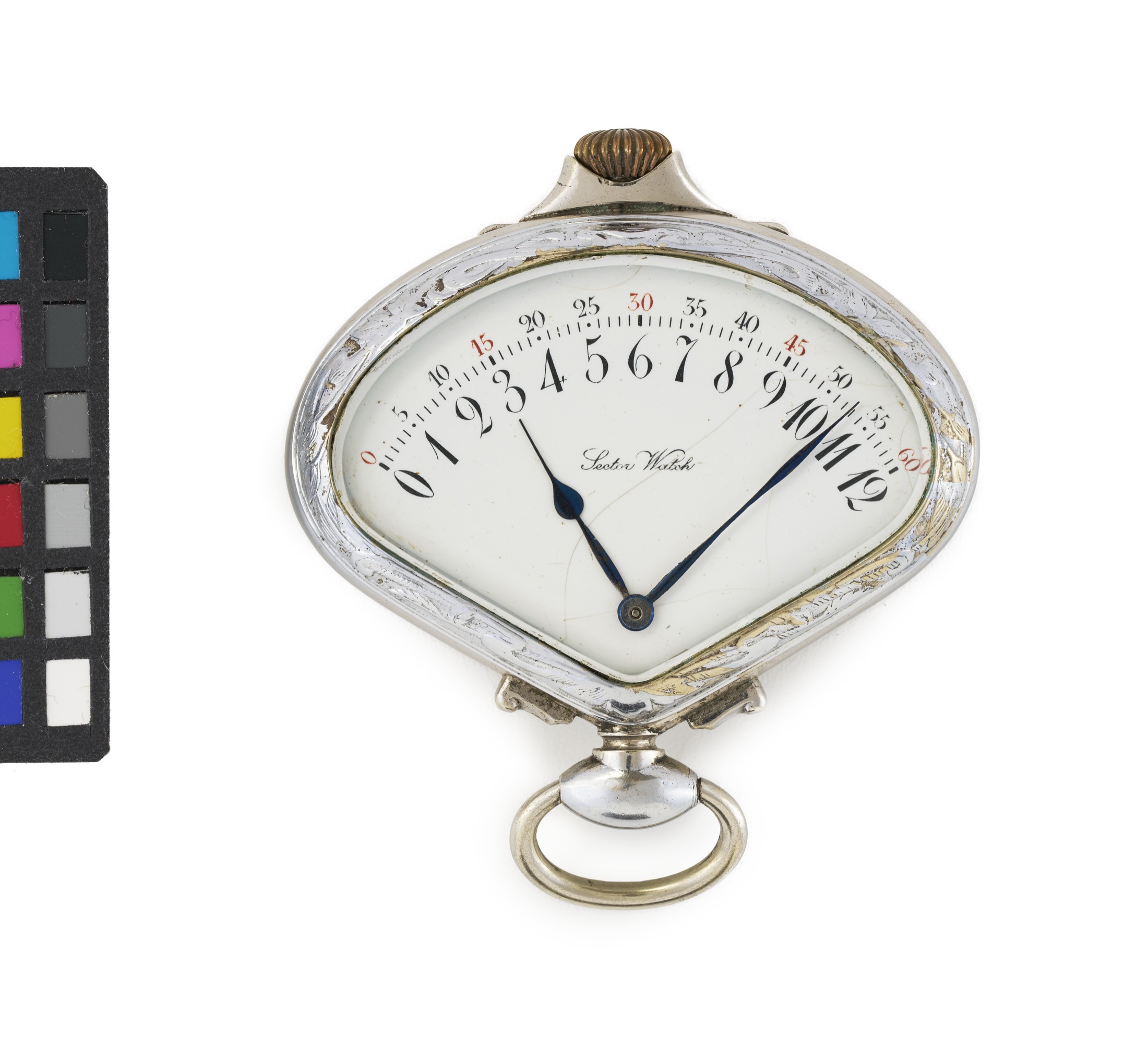
Record began its existence by building a watch shaped like a fan. Half a century later, it apparently built one shaped like a UFO.
Perhaps the strangest thing would have been for the company to make something ordinary.