011928
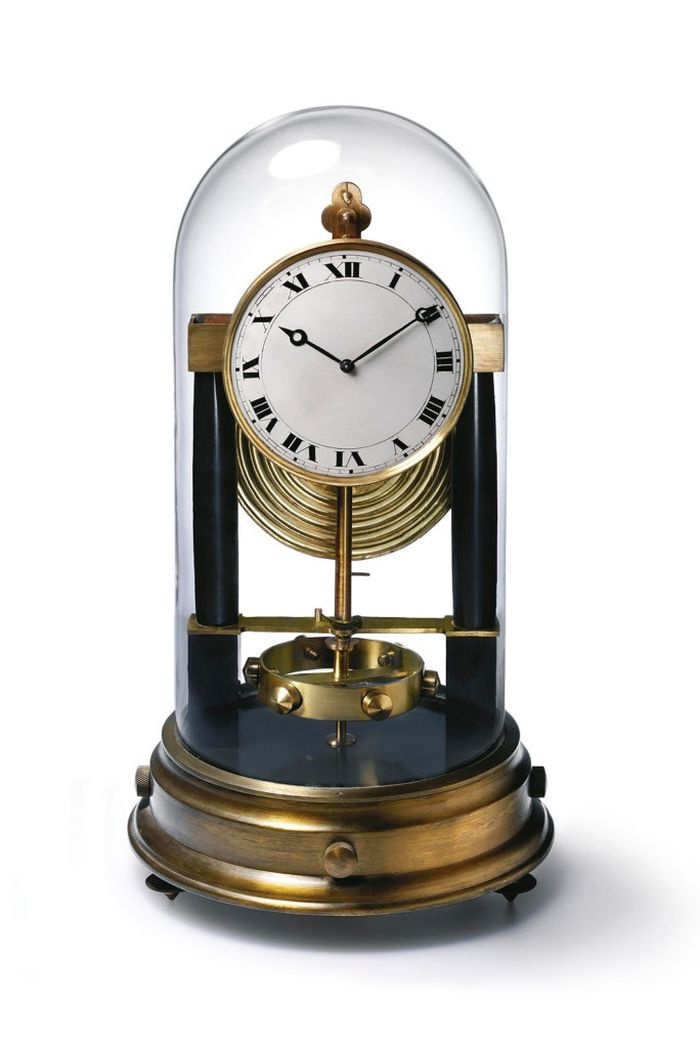
Atmos 0
Jean-Léon Reutter’s first atmospheric-clock prototype, introduced in 1928 and now known as Atmos 0.
A personal collection
Jaeger-LeCoultre Atmos / The Gruen Cosmos
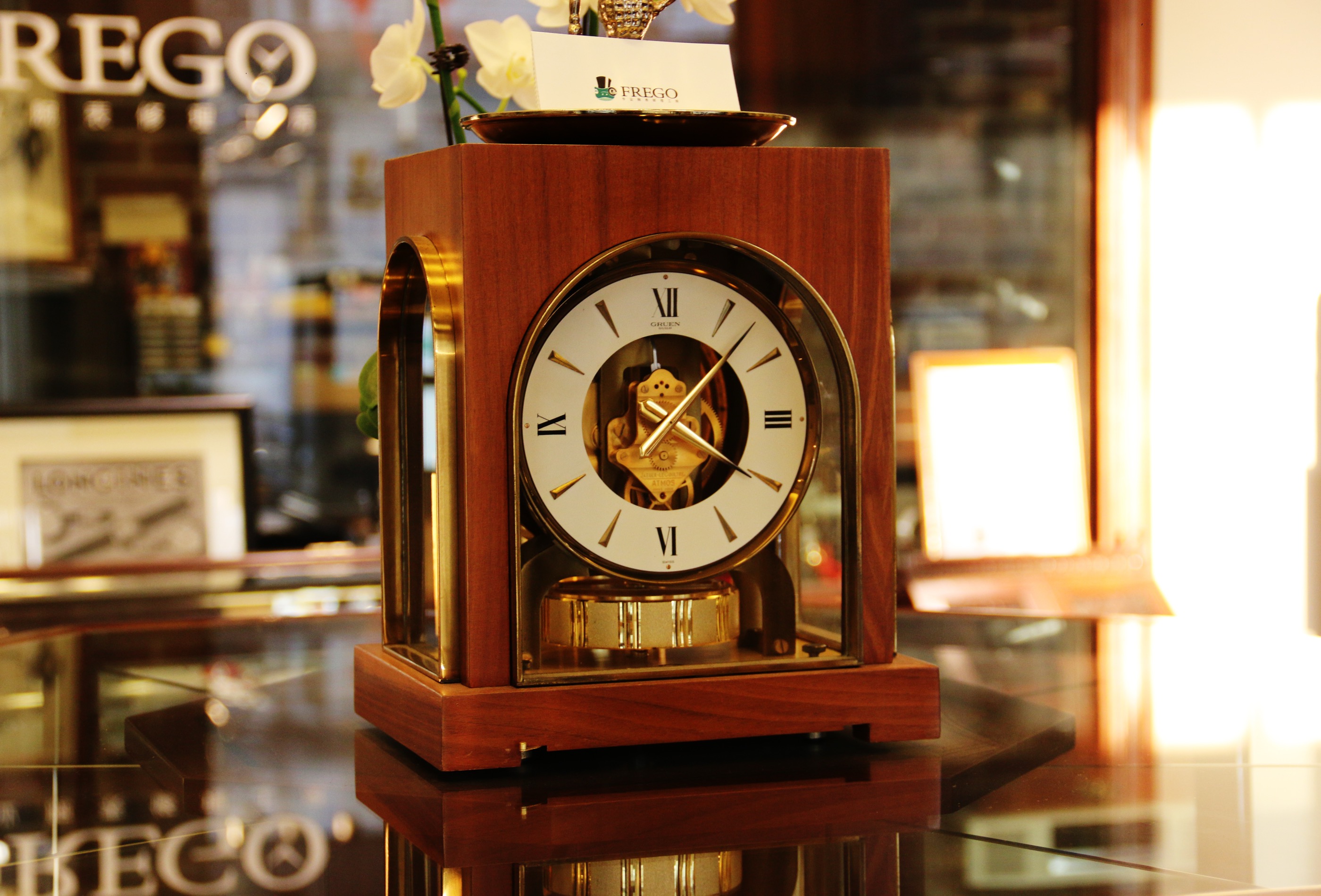
JLC Atmos / one machine, two names
There is something faintly contradictory about this JLC Atmos. Most Atmos clocks present themselves as scientific instruments: gilt machinery suspended inside a severe glass vitrine. This one lives inside warm walnut, framed like a small piece of mid-century furniture.
At twelve, the dial reads Gruen Guild. Through its open centre, the triangular plate tells the deeper story: Jaeger-LeCoultre / Atmos / Swiss Made. Gruen supplied the American face and domestic setting; Le Sentier supplied the machine.
Specialist records identify this as the Gruen–LeCoultre Cosmos, distributed in the United States through Gruen and Cosmos Corp. The surviving documentation does not establish a conventional JLC case reference or name the cabinet’s designer, so the clock is catalogued by the commercial name visible in period records—not by a more precise story invented after the fact.
“Furniture on the outside,
laboratory on the inside.”
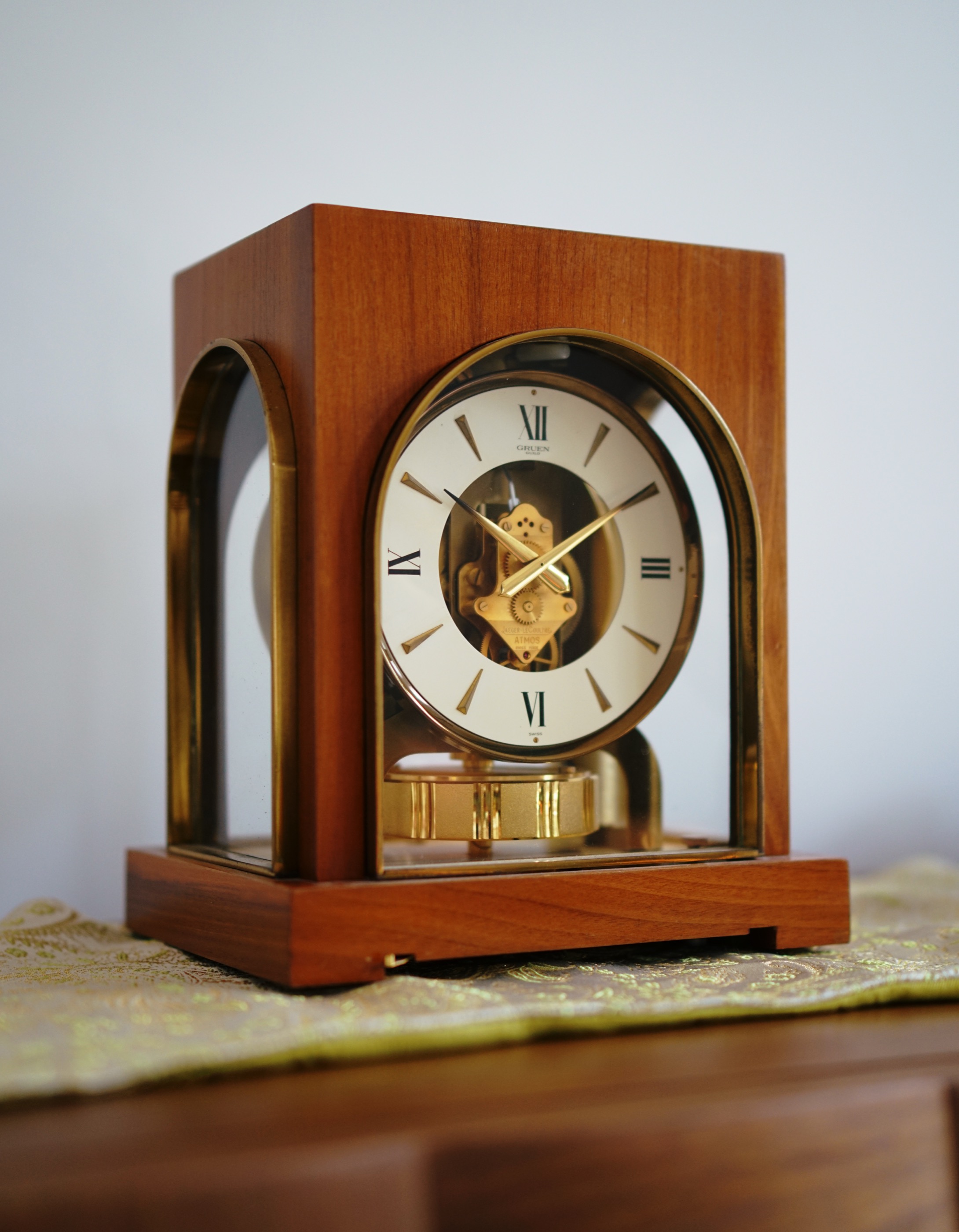
The American cabinet
The outer shell is best described as walnut veneer over a structural cabinet, finished in a warm reddish-brown lacquer. Four flat glass panels sit inside rounded, gold-finished brass frames. Matching auction and specialist examples confirm that the front glass is removed from below to reach the mechanism.
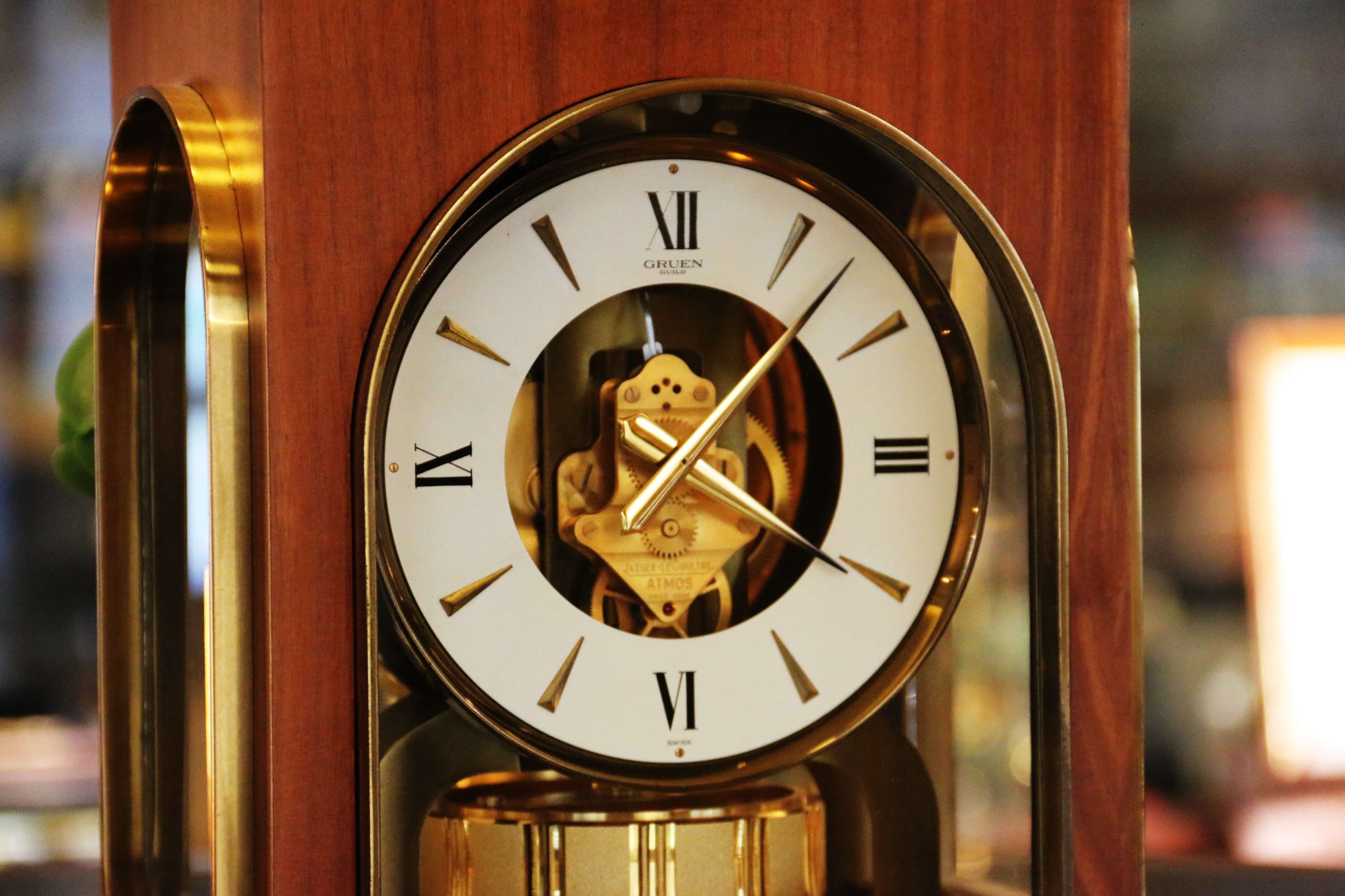
The open dial
Roman numerals at the quarters and gilt darts elsewhere form a white annular chapter ring. The opening beneath the Gruen signature reveals the signed JLC movement and slow wheel train. Below, the torsion balance turns, pauses and returns—one complete oscillation in approximately a minute.
How the Atmos lives on air
One degree / forty-eight hours
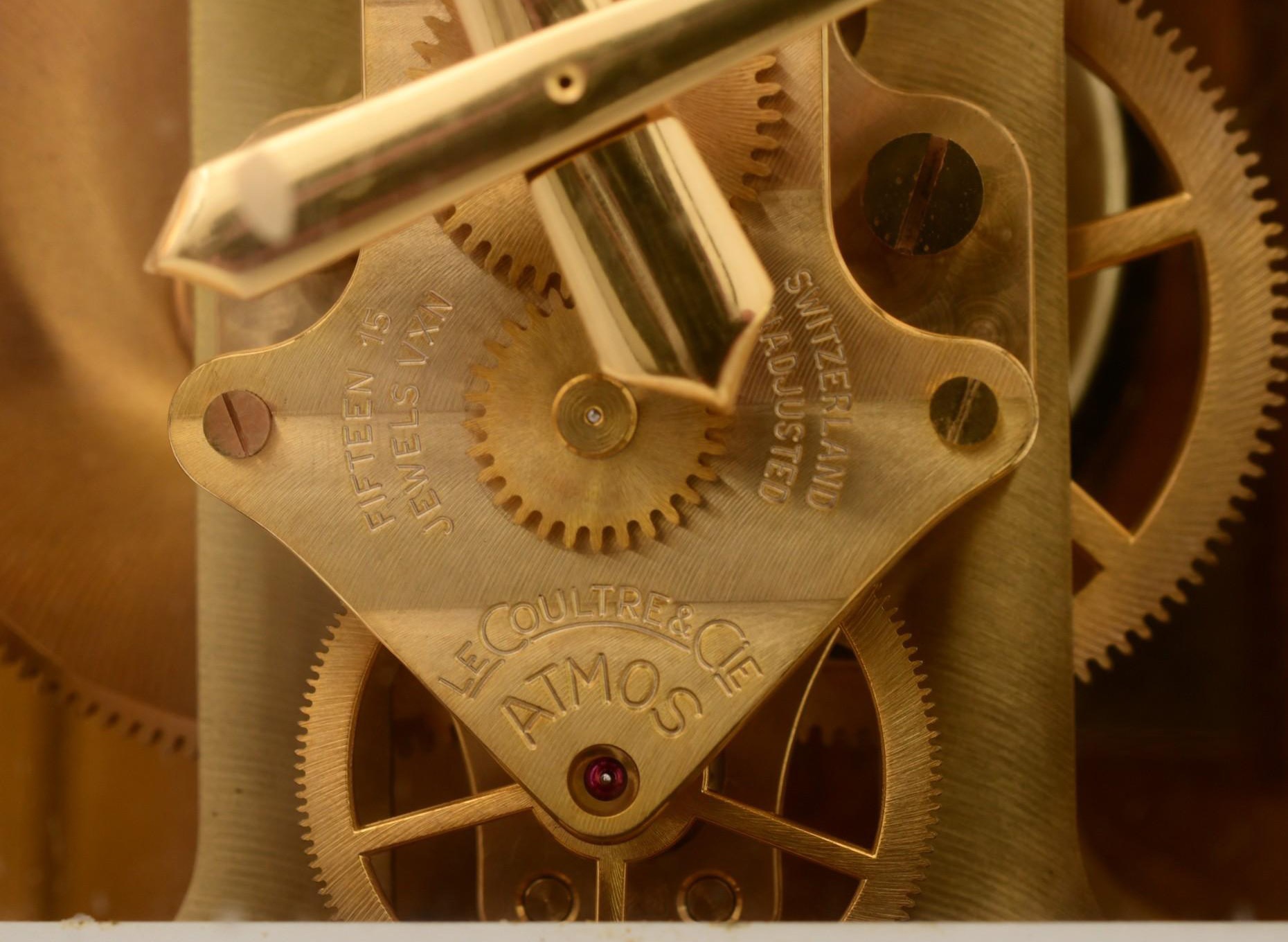
The Calibre 528 is not powered principally by changing barometric pressure. Its sealed capsule contains ethyl chloride in liquid-vapour equilibrium. As temperature rises, pressure expands the bellows; as it falls, the vapour condenses and the bellows contract. A coil spring, fine chain, pulley and ratchet turn that alternating movement into one-way winding.
Jaeger-LeCoultre states that a change of only 1°C stores about 48 hours of running energy. This is not perpetual motion: the clock harvests tiny changes already present in its environment, then spends that energy with extreme restraint.
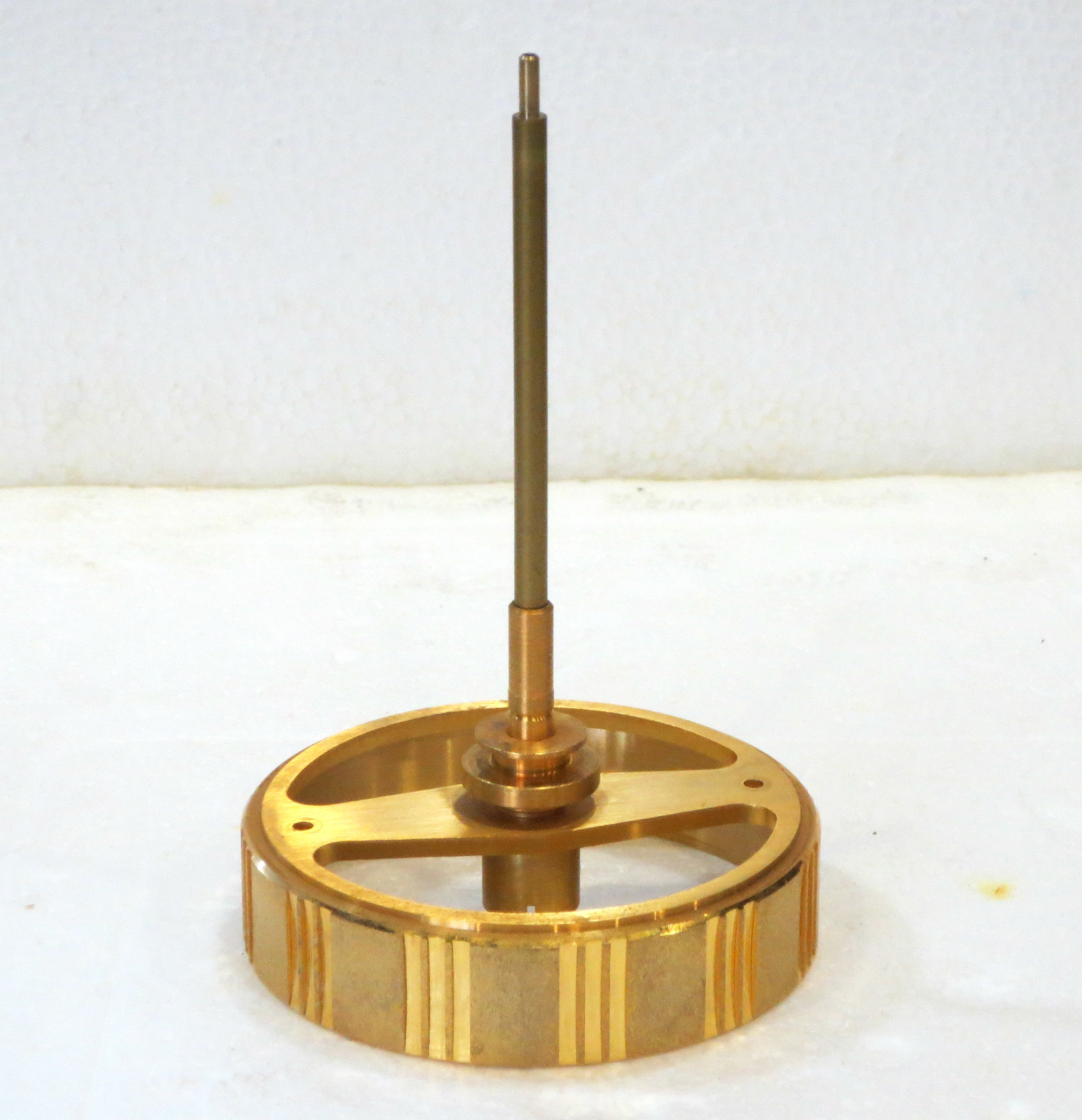
Calibre 528 / 15 jewels
The mature architecture
The 528 indicates hours and minutes only. Its complication is energetic: reduce friction, keep the torsion oscillator slow, and make a room-temperature change do useful work.
Siblings / 1928 to today
Scroll through the Atmos family. The cabinet changes; the clock’s low-energy logic remains.
Jean-Léon Reutter’s first atmospheric-clock prototype, introduced in 1928 and now known as Atmos 0.
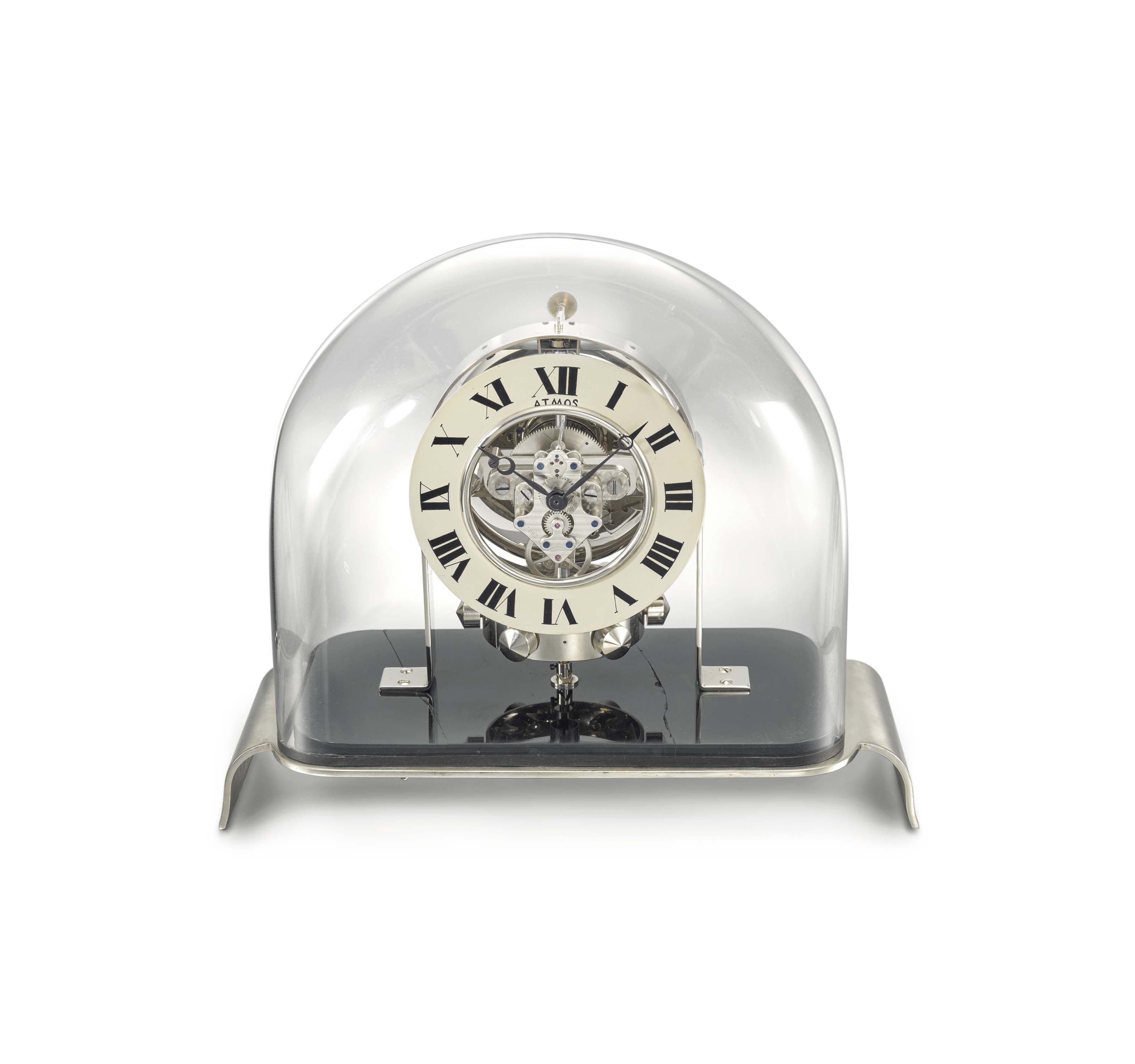
The archive-confirmed Reutter Atmos 1 PO1 no. 3013, with Calibre 30A beneath its glass dome.
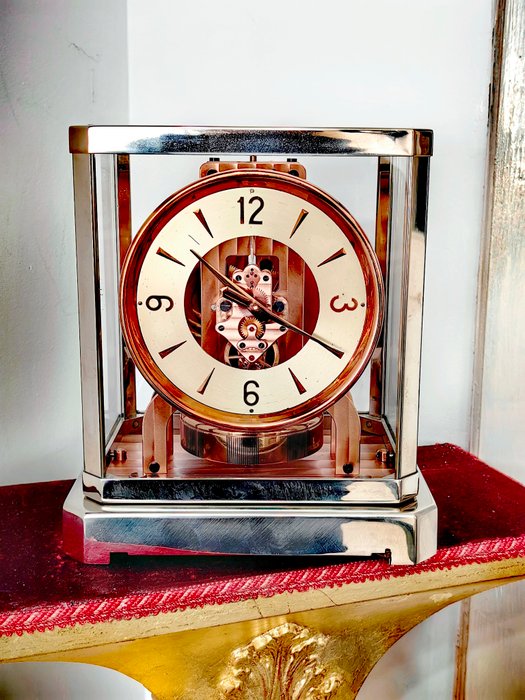
An early serial 16432 example of the LeCoultre-era architecture with an ethyl-chloride bellows.
A private-label American branch: Calibre 528 recast as a warm walnut mantel clock.
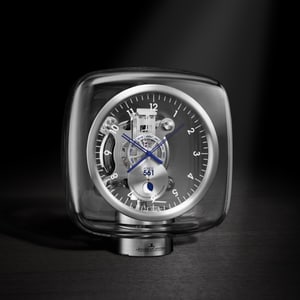
Marc Newson placed the Atmos inside a rounded Baccarat crystal capsule.
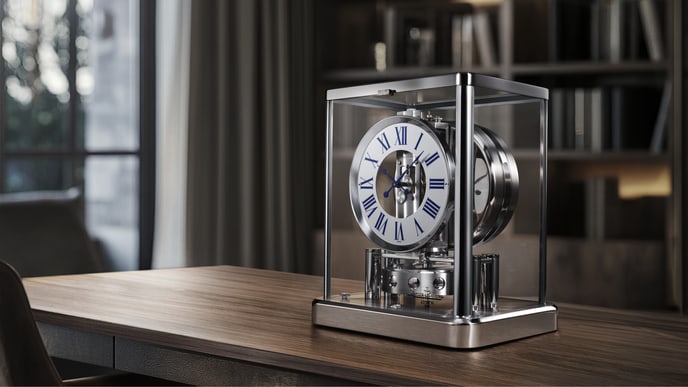
The transparent cabinet remains the family’s clearest modern expression.
Historical references: Atmos 0 image © Jaeger-LeCoultre via Timekeepers Club; Atmos I, PO1 no. 3013, c. 1934, Christie’s / Jaeger-LeCoultre Extract from the Archives; Atmos II, serial 16432, Catawiki lot 104075675. Newson 561 and Classic imagery © Jaeger-LeCoultre; Cosmos photograph from the owner’s collection.
High-resolution movement study
Before the walnut room
Jean-Léon Reutter’s foundational patent claims priority from 15 November 1926. It describes bellows reacting to temperature or atmospheric pressure, pawls driving a ratchet connected to the mainspring, and a torsion pendulum chosen to conserve energy. The Atmos 0 followed in 1928. Jacques-David LeCoultre partnered with Reutter in 1935; the Atmos II launched successfully in 1938.
Read patent GB280536AThe President’s Clock
A Swiss state gift
The Atmos became an official gift of the Swiss Confederation and acquired the nickname “the President’s Clock.” Museum and JLC records name recipients including Queen Elizabeth II, Winston Churchill, Charles de Gaulle, John F. Kennedy, Ronald Reagan, Pope John Paul II and Charlie Chaplin. These presentation pieces were Atmos clocks—not necessarily Gruen Cosmos examples.
Visual & technical archive
The links below are the research spine for this record: manufacturer history, museum objects, comparable Cosmos clocks, patents, parts and workshop material.
Movement 303006, Calibre 528, walnut veneer and four brass-framed windows.
↗02Cosmos cabinet / Atmos ServiceA serialled c.1965 sibling and photographs of the removable front glass.
↗03Official Atmos history / JLCThe 1928–present timeline, one-degree claim, mechanism and presentation history.
↗04Atmos II / Science MuseumA documented 1939 clock with its early ethyl-chloride motor and torsion oscillator.
↗05Reutter patent GB280536APriority 15 November 1926: bellows, pawls, ratchet and the torsion pendulum.
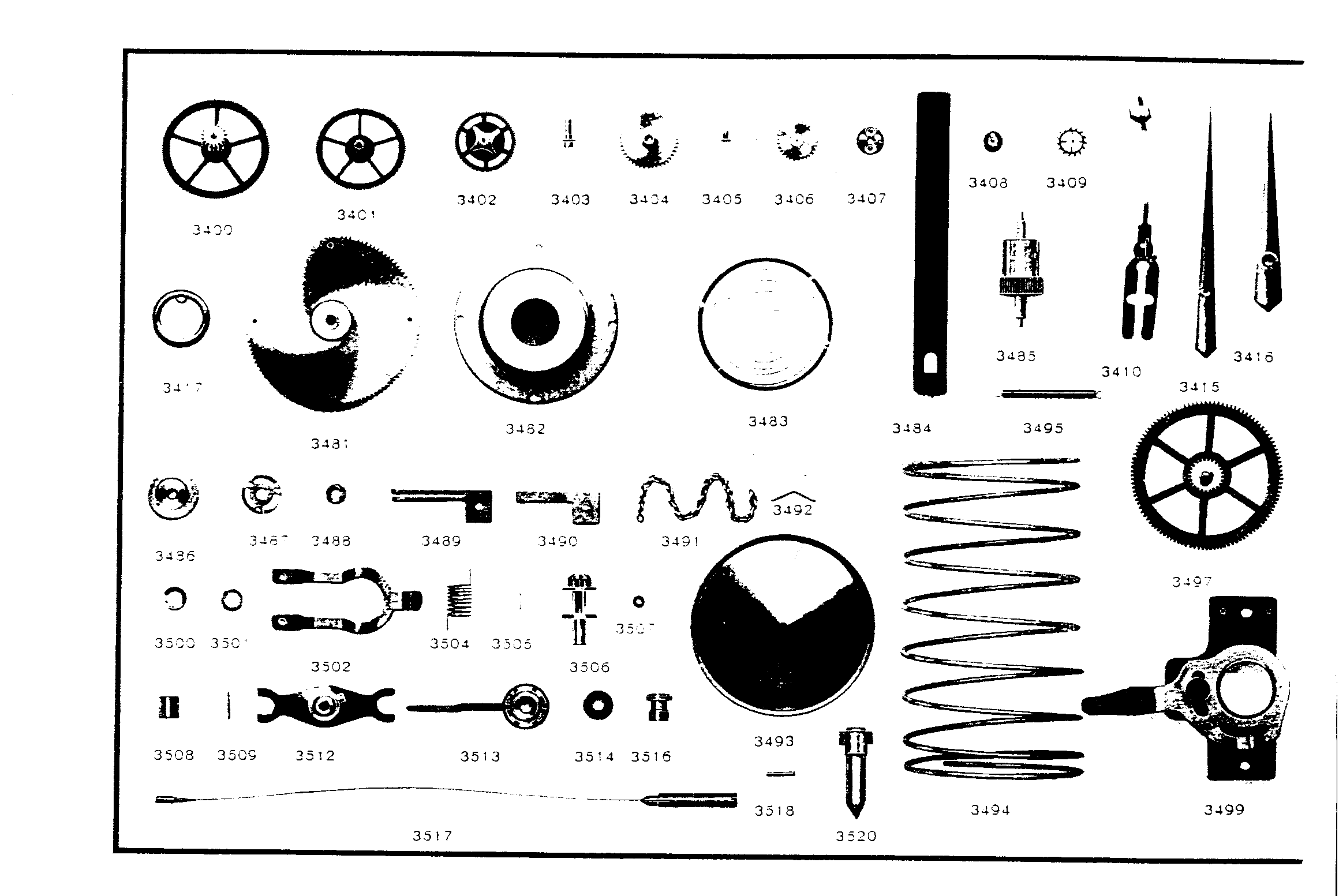
↗06Calibre 526/528 parts archiveJLC parts illustrations preserved by a specialist, plus component numbers and cross-reference.
↗07Calibre 528 service manualScans of an official German-language workshop manual and service sequence.
↗08The President’s Clock / RMGMuseum record of the Atmos as a Swiss state gift to political and cultural figures.
↗09Atmos movement photographsHigh-resolution, openly licensed views of the bellows and wheel train.
↗10Chaplin’s presentation AtmosThe Atmos given to Charlie Chaplin and now shown at Chaplin’s World.
↗Owner photographs are used with the collection. Jaeger-LeCoultre imagery is credited alongside its use. The movement photographs are CC BY-SA 3.0 and the prototype photograph is CC0; other external records are linked rather than copied.

